The impact of Tomberg’s work has resonated deeply across spiritual and intellectual boundaries. Bede Griffiths remarked: “There is hardly a line without some profound significance… To me it is the last word in wisdom.” Therese Schroeder-Sheker, renowned harpist and music-thanatologist, describes it as a “work of staggering insight, intelligence, imagination and service” and goes on to say it “is quite simply manna in the desert.”
From the contemplative tradition, Basil Pennington, OCSO, noted: “It is without doubt the most extraordinary work I have ever read. It has tremendous spiritual depth and insight.” Similarly, Thomas Keating, OCSO, stated: “This book, in my view, is the greatest contribution to date toward the rediscovery and renewal of the Christian contemplative tradition,” while Cynthia Bourgeault observed that it “represents a brilliant synthesis of esoteric and mystical wisdom.”
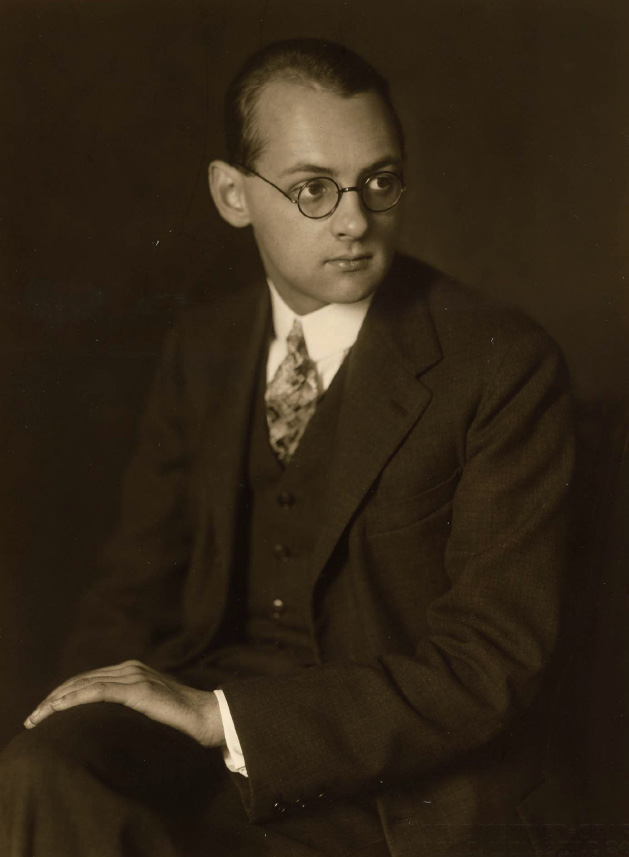
Hans Urs von Balthasar (pictured in the 1920s, Vienna, image via Unsplash), who wrote the foreword to the German edition, spoke of “shards of Christian revelation”. It is even rumored that Pope John Paul II studied the work, as a photograph of him at his desk shows the German edition clearly visible (link to photo).
In Germany, the philosopher Robert Spaemann studied the book for years and led various study groups dedicated to Meditations on the Tarot. Cardinal Christoph Schönborn, in a Festschrift for Pope Benedict XVI, pointed out that “this unusual book is a still largely untapped treasure chest.” From a scholarly perspective, Antoine Faivre called it “the most beautiful and instructive book of the twentieth century concerning western esotericism.” Furthermore, Owen Barfield—philosopher and member of the “Inklings” alongside C.S. Lewis and J.R.R. Tolkien—was a close friend of Tomberg, respecting his profound attempt to transpose “spiritual science” into a more orthodox Christian key.